

Penguins of the Far South: Falklands, South Georgia and Antarctica
19-night Antarctica expedition · 4 departures · from $24,917 per guest
- 19 nightsDuration
- Ocean ExplorerShip
- UshuaiaRound trip from
- Oct 25, 2026Next sailing

Experience it all on our 20–day Penguins of the Far South: Falklands, South Georgia & Antarctica itinerary. Wander the sandy dunes, rugged seabird cliffs, and the quaint capital of Stanley in the rarely-visited Falklands. In South Georgia, stand amid massive king penguin colonies and uncover the island’s legendary history.
Then set foot on the magical 7th Continent, where incredible wildlife, glaciers, icebergs, and snow-clad peaks reveal nature at its most awe-inspiring
Upcoming departures
| Sails | Ship | Nights | From (per guest) | |
|---|---|---|---|---|
| Oct 25, 2026 | Ocean Explorer | 19 | $24,917 | Cabins & fares |
| Feb 10, 2027 | Ocean Explorer | 19 | $36,760 | Cabins & fares |
| Feb 14, 2028 | Ocean Explorer | 19 | $48,640 | Cabins & fares |
| Feb 2, 2029 | Ocean Explorer | 19 | $30,263 | Cabins & fares |
Day by day
As planned for the Oct 25, 2026 departure; other departures may differ.

Day 1Arrive in Ushuaia, Argentina
Your gateway for this expedition is Ushuaia, Argentina. Located within the Tierra del Fuego archipelago, Ushuaia has a small-town feel yet boasts many shops, museums, cafés and restaurants that you can enjoy before your voyage. If you’re feeling adventurous, the nearby Tierra del Fuego National Park and Martial Glacier offer plenty of outdoor activities, such as hiking.
Day 2Embark
As you embark, the anticipation grows. Trade your land legs for sea legs, meet and greet your fellow travelers and get acquainted with your ship. Since every Antarctic adventure presents new opportunities and experiences, embarkation day is just as exciting for your Expedition Team as it is for you. On board your team will be there both to ensure your comfort and safety as well as help make your wildlife dreams come true.
Day 3At Sea
Your days at sea are filled with presentations led by your Expedition Team on photography, wildlife, glaciology, and history. In between presentations, spend time on deck looking for wildlife or chatting with your shipmates over a drink at the bar.
Day 4Falkland Islands (Islas Malvinas)
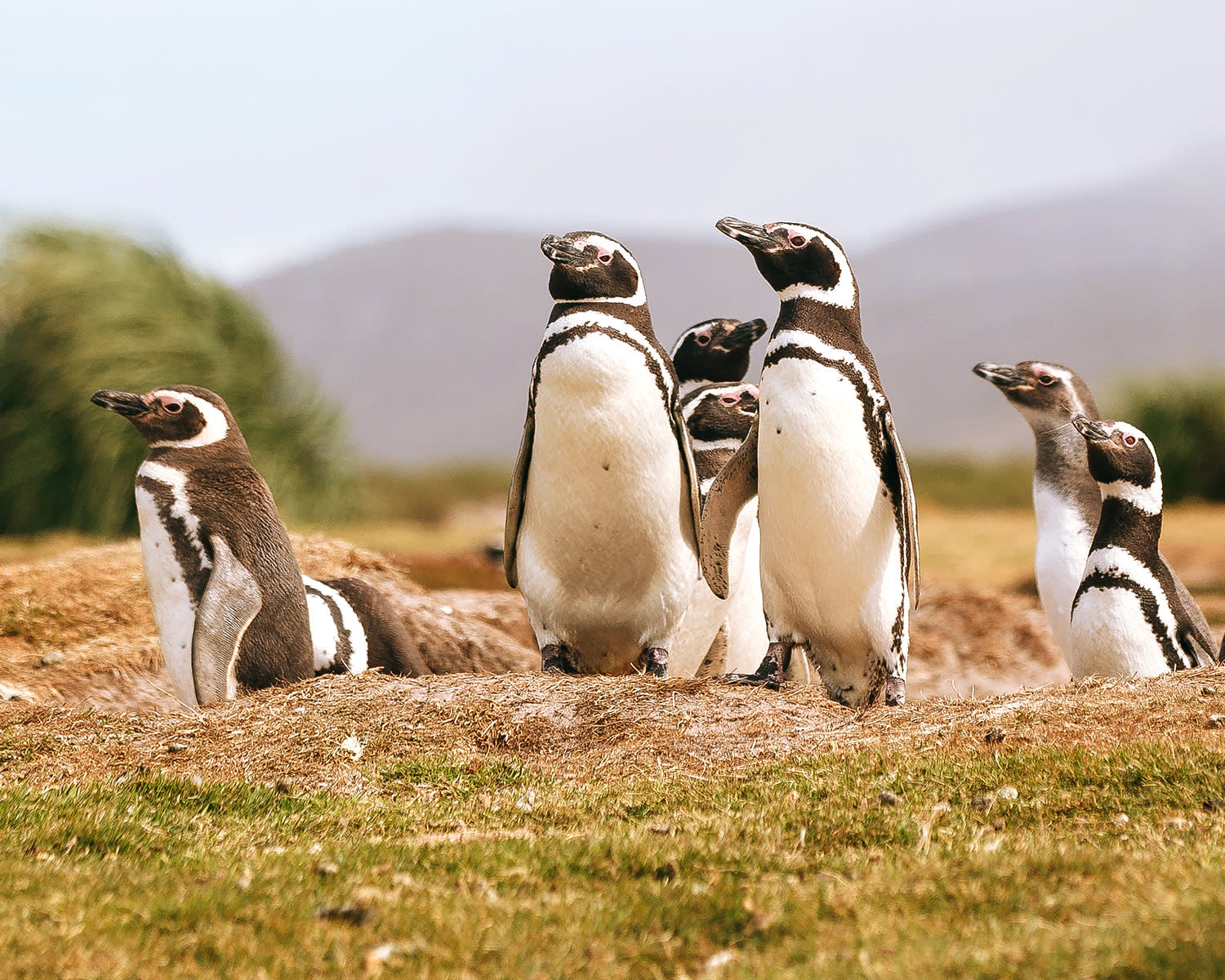
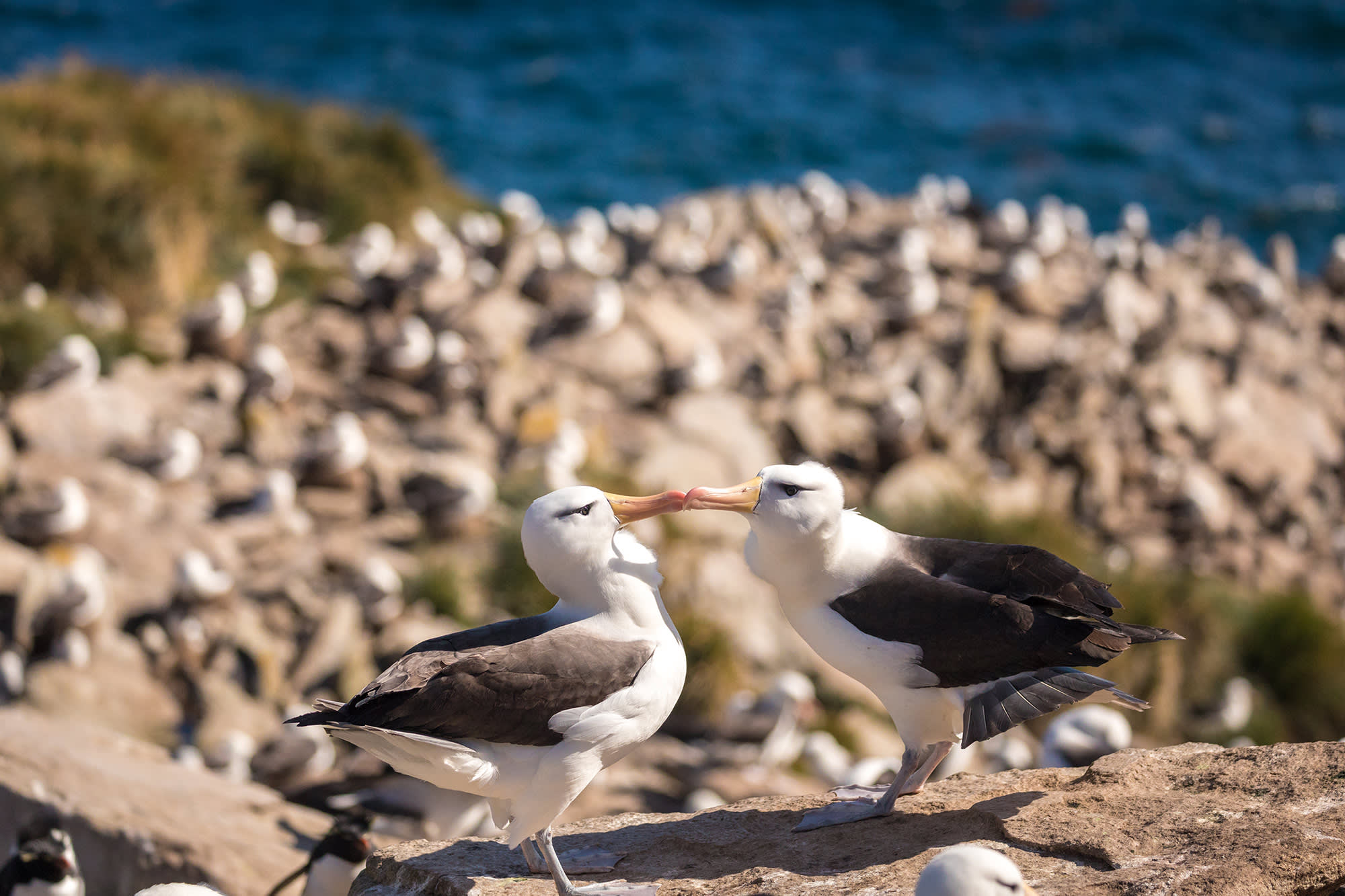
Upon your arrival in the Falklands (Malvinas), your camera will get its first real workout capturing the abundant wildlife and rugged feel of this sub- Antarctic region. The archipelago contains two main islands, East Falkland and West Falkland, which you will explore during daily excursions.Stanley, also known as Port Stanley, is often a favored landing site, as the town offers a unique British outpost feel, complete with eclectic charm. You’ll be free to explore, grab a pint at the local pub or visit the cathedral and museum.In terms of wildlife, the archipelago is home to Magellanic, gentoo and southern rockhopper penguins. If you’re lucky, you may even spot king penguins here as well! You can expect to see black- browed albatross, plus two endemic bird species—the flightless Falkland steamer duck and, possibly, the elusive Cobb’s wren.Your expert education team will enrich your understanding of the local flora and fauna, making the most out of your time in the Falklands.
Day 5Falkland Islands (Islas Malvinas)
Upon your arrival in the Falklands (Malvinas), your camera will get its first real workout capturing the abundant wildlife and rugged feel of this sub- Antarctic region. The archipelago contains two main islands, East Falkland and West Falkland, which you will explore during daily excursions.Stanley, also known as Port Stanley, is often a favored landing site, as the town offers a unique British outpost feel, complete with eclectic charm. You’ll be free to explore, grab a pint at the local pub or visit the cathedral and museum.In terms of wildlife, the archipelago is home to Magellanic, gentoo and southern rockhopper penguins. If you’re lucky, you may even spot king penguins here as well! You can expect to see black- browed albatross, plus two endemic bird species—the flightless Falkland steamer duck and, possibly, the elusive Cobb’s wren.Your expert education team will enrich your understanding of the local flora and fauna, making the most out of your time in the Falklands.
Day 6At Sea
Sailing southeast to South Georgia, you’ll officially enter Antarctic waters once you cross the Antarctic Convergence, an invisible biological boundary encircling the continent. This meeting of oceans, where the cold Antarctic waters mix and mingle with the warmer waters of the Indian, Pacific and Atlantic Oceans, helps nourish the abundance of krill that attracts whales, seals, and birdlife to this part of the world. Your Expedition Team will notify you when you cross this invisible yet important line, and also look out for the seabirds and marine life that frequent this nutrient-rich area.
Day 7At Sea
Sailing southeast to South Georgia, you’ll officially enter Antarctic waters once you cross the Antarctic Convergence, an invisible biological boundary encircling the continent. This meeting of oceans, where the cold Antarctic waters mix and mingle with the warmer waters of the Indian, Pacific and Atlantic Oceans, helps nourish the abundance of krill that attracts whales, seals, and birdlife to this part of the world. Your Expedition Team will notify you when you cross this invisible yet important line, and also look out for the seabirds and marine life that frequent this nutrient-rich area.
Day 8South Georgia
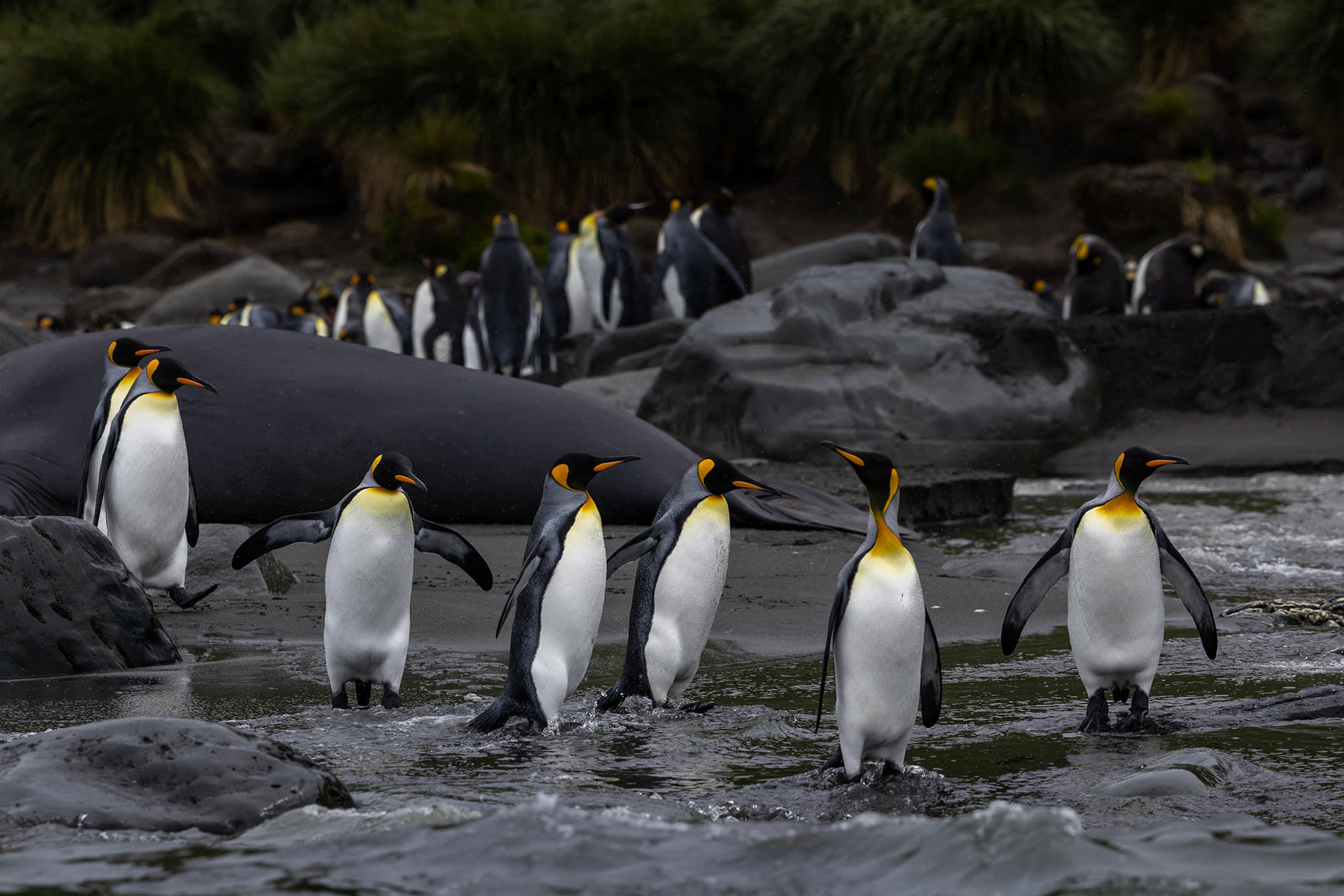
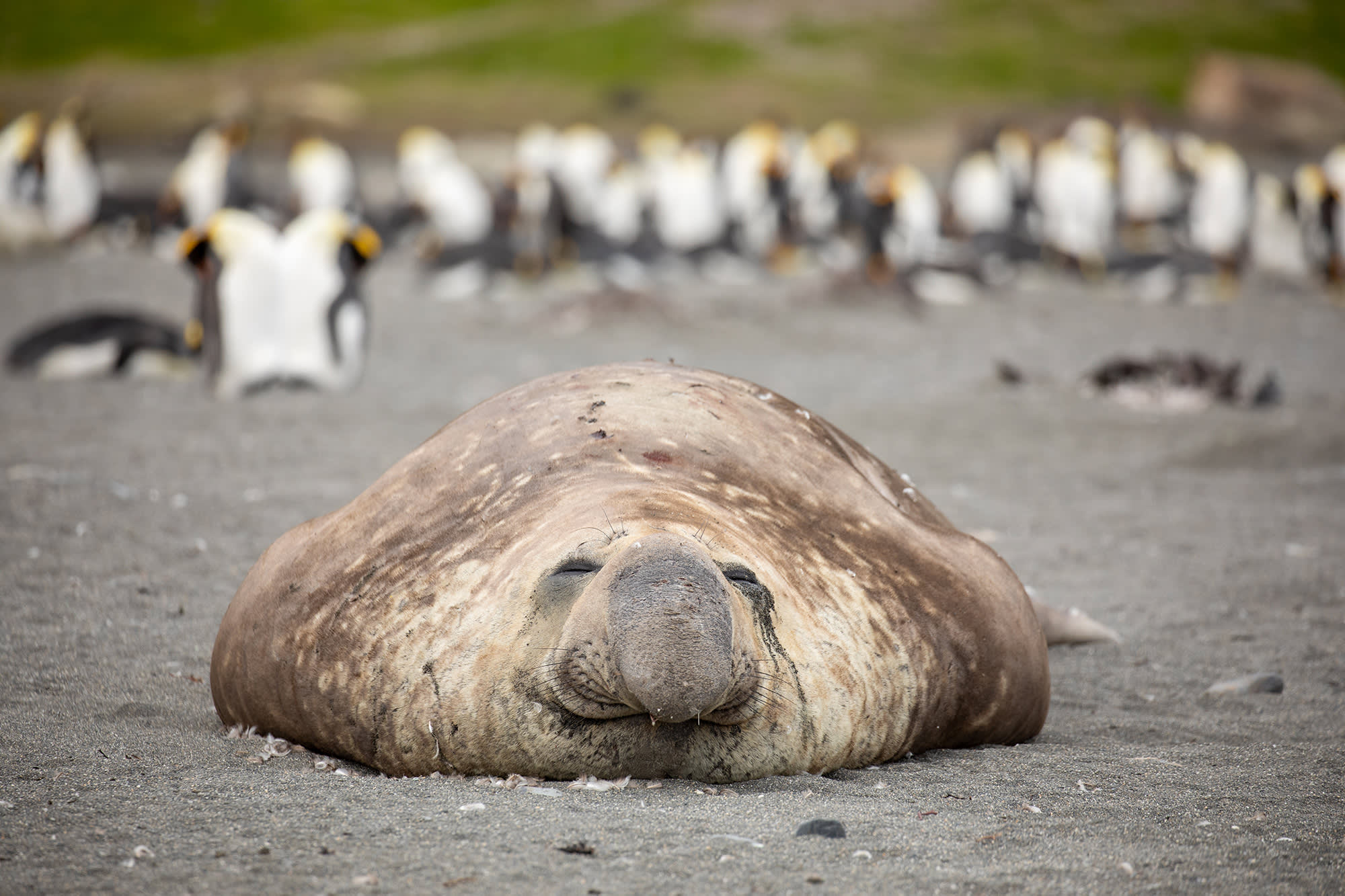
This remote, mountainous island was a popular stop for many historic Antarctic expeditions and was once known for whale– and seal–hunting. Today, island wildlife populations are rebounding, but you’ll still see remnants of old whaling stations and other abandoned outposts.One significant and historic site is the grave of the great explorer Sir Ernest Shackleton. You can visit his grave at the settlement of Grytviken, which is also home to an old whaling station, plus a museum, gift shop, church and small research station.Although South Georgia’s history is an important attraction to the island, its incredible densities of wildlife make it truly memorable. Each landing you make on South Georgia, often referred to as the Galapagos of the Southern Sea, will open your eyes to the wondrous lives of new, enthralling creatures.One day you may see colonies with hundreds of thousands of pairs of king penguins waddling on shore, and the next, you may visit another beach inhabited by hundreds of fur or elephant seals. The grasses, mountains and beaches of South Georgia all play an important role in the breeding and survival of different species on the island. This fragile and interwoven relationship is something your Expedition Team will instill in you during your time here.
Day 9South Georgia
This remote, mountainous island was a popular stop for many historic Antarctic expeditions and was once known for whale– and seal–hunting. Today, island wildlife populations are rebounding, but you’ll still see remnants of old whaling stations and other abandoned outposts.One significant and historic site is the grave of the great explorer Sir Ernest Shackleton. You can visit his grave at the settlement of Grytviken, which is also home to an old whaling station, plus a museum, gift shop, church and small research station.Although South Georgia’s history is an important attraction to the island, its incredible densities of wildlife make it truly memorable. Each landing you make on South Georgia, often referred to as the Galapagos of the Southern Sea, will open your eyes to the wondrous lives of new, enthralling creatures.One day you may see colonies with hundreds of thousands of pairs of king penguins waddling on shore, and the next, you may visit another beach inhabited by hundreds of fur or elephant seals. The grasses, mountains and beaches of South Georgia all play an important role in the breeding and survival of different species on the island. This fragile and interwoven relationship is something your Expedition Team will instill in you during your time here.
Day 10South Georgia
This remote, mountainous island was a popular stop for many historic Antarctic expeditions and was once known for whale– and seal–hunting. Today, island wildlife populations are rebounding, but you’ll still see remnants of old whaling stations and other abandoned outposts.One significant and historic site is the grave of the great explorer Sir Ernest Shackleton. You can visit his grave at the settlement of Grytviken, which is also home to an old whaling station, plus a museum, gift shop, church and small research station.Although South Georgia’s history is an important attraction to the island, its incredible densities of wildlife make it truly memorable. Each landing you make on South Georgia, often referred to as the Galapagos of the Southern Sea, will open your eyes to the wondrous lives of new, enthralling creatures.One day you may see colonies with hundreds of thousands of pairs of king penguins waddling on shore, and the next, you may visit another beach inhabited by hundreds of fur or elephant seals. The grasses, mountains and beaches of South Georgia all play an important role in the breeding and survival of different species on the island. This fragile and interwoven relationship is something your Expedition Team will instill in you during your time here.
Day 11South Georgia
This remote, mountainous island was a popular stop for many historic Antarctic expeditions and was once known for whale– and seal–hunting. Today, island wildlife populations are rebounding, but you’ll still see remnants of old whaling stations and other abandoned outposts.One significant and historic site is the grave of the great explorer Sir Ernest Shackleton. You can visit his grave at the settlement of Grytviken, which is also home to an old whaling station, plus a museum, gift shop, church and small research station.Although South Georgia’s history is an important attraction to the island, its incredible densities of wildlife make it truly memorable. Each landing you make on South Georgia, often referred to as the Galapagos of the Southern Sea, will open your eyes to the wondrous lives of new, enthralling creatures.One day you may see colonies with hundreds of thousands of pairs of king penguins waddling on shore, and the next, you may visit another beach inhabited by hundreds of fur or elephant seals. The grasses, mountains and beaches of South Georgia all play an important role in the breeding and survival of different species on the island. This fragile and interwoven relationship is something your Expedition Team will instill in you during your time here.
Day 12At Sea
Say goodbye to the king penguins as you leave for your next destination: Antarctica! Your days at sea are filled with presentations, workshops, and social activities led by your Expedition Team.If conditions allow, we may attempt landfall on the South Orkney Islands, our first official stop in Antarctica.
Day 13At Sea
Say goodbye to the king penguins as you leave for your next destination: Antarctica! Your days at sea are filled with presentations, workshops, and social activities led by your Expedition Team.If conditions allow, we may attempt landfall on the South Orkney Islands, our first official stop in Antarctica.
Day 14South Shetland Islands and Antarctic Peninsula
The most common reaction upon reaching the Antarctic Continent is a sense of reverence and awe. The experience is beyond words, since few places are as untouched and enduring as Antarctica.You will discover that Antarctica is a land of extremes. At one moment you’ll be overcome with a feeling of complete isolation and silence, and at the next moment you’ll be inspired by nature as a calving glacier crashes into a brilliant blue sea or a curious penguin waddles by to observe the human.Your Expedition Team will take care of you at each excursion, whether you are Zodiac cruising, visiting a historical site or consorting with penguin colonies.Chinstrap, Adélie and gentoo penguins are found here, along with Weddell, fur, crabeater and leopard seals. During Zodiac cruises, keep an eye out for Antarctic whales such as minkes, as you may get a chance for an intimate experience with these majestic animals. Each day and each excursion will present a new collection of creatures to entertain you and keep your camera busy.As exciting as the Zodiac excursions and landings are, perhaps you’ll treat yourself to an extra-special Antarctic experience by partaking in an optional paddling excursion (at an extra cost) or cast reason aside and jump into Antarctic waters for the Polar Plunge!
Day 15South Shetland Islands and Antarctic Peninsula
The most common reaction upon reaching the Antarctic Continent is a sense of reverence and awe. The experience is beyond words, since few places are as untouched and enduring as Antarctica.You will discover that Antarctica is a land of extremes. At one moment you’ll be overcome with a feeling of complete isolation and silence, and at the next moment you’ll be inspired by nature as a calving glacier crashes into a brilliant blue sea or a curious penguin waddles by to observe the human.Your Expedition Team will take care of you at each excursion, whether you are Zodiac cruising, visiting a historical site or consorting with penguin colonies.Chinstrap, Adélie and gentoo penguins are found here, along with Weddell, fur, crabeater and leopard seals. During Zodiac cruises, keep an eye out for Antarctic whales such as minkes, as you may get a chance for an intimate experience with these majestic animals. Each day and each excursion will present a new collection of creatures to entertain you and keep your camera busy.As exciting as the Zodiac excursions and landings are, perhaps you’ll treat yourself to an extra-special Antarctic experience by partaking in an optional paddling excursion (at an extra cost) or cast reason aside and jump into Antarctic waters for the Polar Plunge!
Day 16South Shetland Islands and Antarctic Peninsula
The most common reaction upon reaching the Antarctic Continent is a sense of reverence and awe. The experience is beyond words, since few places are as untouched and enduring as Antarctica.You will discover that Antarctica is a land of extremes. At one moment you’ll be overcome with a feeling of complete isolation and silence, and at the next moment you’ll be inspired by nature as a calving glacier crashes into a brilliant blue sea or a curious penguin waddles by to observe the human.Your Expedition Team will take care of you at each excursion, whether you are Zodiac cruising, visiting a historical site or consorting with penguin colonies.Chinstrap, Adélie and gentoo penguins are found here, along with Weddell, fur, crabeater and leopard seals. During Zodiac cruises, keep an eye out for Antarctic whales such as minkes, as you may get a chance for an intimate experience with these majestic animals. Each day and each excursion will present a new collection of creatures to entertain you and keep your camera busy.As exciting as the Zodiac excursions and landings are, perhaps you’ll treat yourself to an extra-special Antarctic experience by partaking in an optional paddling excursion (at an extra cost) or cast reason aside and jump into Antarctic waters for the Polar Plunge!
Day 17South Shetland Islands and Antarctic Peninsula
The most common reaction upon reaching the Antarctic Continent is a sense of reverence and awe. The experience is beyond words, since few places are as untouched and enduring as Antarctica.You will discover that Antarctica is a land of extremes. At one moment you’ll be overcome with a feeling of complete isolation and silence, and at the next moment you’ll be inspired by nature as a calving glacier crashes into a brilliant blue sea or a curious penguin waddles by to observe the human.Your Expedition Team will take care of you at each excursion, whether you are Zodiac cruising, visiting a historical site or consorting with penguin colonies.Chinstrap, Adélie and gentoo penguins are found here, along with Weddell, fur, crabeater and leopard seals. During Zodiac cruises, keep an eye out for Antarctic whales such as minkes, as you may get a chance for an intimate experience with these majestic animals. Each day and each excursion will present a new collection of creatures to entertain you and keep your camera busy.As exciting as the Zodiac excursions and landings are, perhaps you’ll treat yourself to an extra-special Antarctic experience by partaking in an optional paddling excursion (at an extra cost) or cast reason aside and jump into Antarctic waters for the Polar Plunge!
Day 18Crossing the Drake Passage
After more than two weeks of endless wildlife encounters, your journey home begins. Crossing the Drake is your unofficial rite of passage, completing your Antarctic adventure. Enjoy your final moments celebrating with your fellow shipmates and savor the silence of the sea as long as you can.
Day 19Crossing the Drake Passage
After more than two weeks of endless wildlife encounters, your journey home begins. Crossing the Drake is your unofficial rite of passage, completing your Antarctic adventure. Enjoy your final moments celebrating with your fellow shipmates and savor the silence of the sea as long as you can.
Day 20Disembarkation in Ushuaia
After breakfast aboard the ship, it is time to part ways and say goodbye to your Expedition Team. Airport transfers will be provided for those departing on the first homeward flights. Other guests will be transferred to town.
Gallery



Questions about this trip?
Our polar specialists can compare these departures, cabins and current offers with you.
Email explore@polaradventure.com or call toll-free 1-888-611-7688.
Contact us