

Svalbard, Arctic Circle & Scottish Isles
CRUISE ID # AQUA7975
Longyearbyen TO Glasgow
Suites & Fares
Itinerary
- Day 1August 28, 2027
Longyearbyen, Svalbard and Jan Mayen
Longyearbyen is the biggest settlement in Svalbard. Seat of the Norwegian administration, it also has the best services and infrastructure in the archipelago. Located deep in the Adventfjord, a sidearm of the Isfjorden (Icefjord), Longyearbyen’s airport can be used all-year round, but its harbor is blocked by ice in winter. Most shops, hotels, restaurants and a hospital are within easy walking distance of the port. One of the most prominent buildings in town is the UNIS center, where several Norwegian universities have joined forces to operate and offer the northernmost higher education to both Norwegian and international students. Adjacent to UNIS, and well worth a visit, is the Svalbard Museum, covering the natural history and exploitation of Svalbard. Remnants of the former mining activity can be seen all around Longyearbyen and even in town.
- Day 2August 29, 2027
Calypsobyen, Spitsbergen, Svalbard and Jan Mayen
We arrive in Bellsund to explore Calypsobyen, a former coal mining settlement and beluga hunting station that operated in the early 20th century. Here, scattered ruins and weathered structures stand as silent witnesses to the industrial era that once brought life to this remote corner of Svalbard, creating a stark contrast between natural beauty and manmade history. - Day 3August 30, 2027
Gnålodden, Svalbard and Jan Mayen
1. - Day 3August 30, 2027
Sørkapp, Spitsbergen, Svalbard and Jan Mayen
2. - Day 4August 31, 2027
Bear Island, Norway
Almost half way between Tromsø and Svalbard is isolated Bear Island – considered the southernmost island of the Svalbard Archipelago. The unglaciated island is an impressive Nature Reserve of steep, high cliffs that are frequented by seabirds, specifically at the southern tip. Brünnich’s Guillemots, Common Guillemots, Black Guillemots, Razorbills, Little Auks, Northern Fulmars, Glaucous Gulls, Black-legged Kittiwakes, and even Atlantic Puffins and Northern Gannets nest along the cliffs south of Sørhamna. Because of the large numbers of birds and the isolated location, Bear Island has been recognized as an Important Bird Area. It was once a hotspot for whaling and walrus hunting, and at one stage even mining. Bear Island received its name because of a polar bear encountered by early explorer Willem Barentsz. Today polar bears rarely visit the island and its only settlement is a meteorological station manned all-year round on the north side.
- Day 5September 01, 2027
Bleik, Norway
Step ashore at Bleik, a fishing village set along one of Norway's longest white-sand beaches. Keep your eyes peeled for sperm whales attracted to the surrounding waters' rich feeding grounds, while just offshore, the triangle-shaped island of Bleiksøya hosts one of Norway's largest puffin colonies. - Day 6September 02, 2027
Tromsø, Norway
With its centre located on the island of Tromsø, the municipality of Tromsø is more than five times the size of Norway’s capital, Oslo, and is the world’s northernmost university city. Lying 200 miles inside the Arctic Circle, it is known as the 'Gateway to the Arctic' because it was used as a starting point for hunters looking for Arctic foxes, polar bears and seals. In the 19th century it was a base for explorers on Arctic expeditions – a history that is remembered in the city’s Polar Museum, which you can visit on an excursion. Also commemorated in the area is the history of Norway’s indigenous people, the Sami. Visitors can learn about the traditions, heritage and modern preservation of the Sami culture at the Tromsø Museum. Nowadays, Tromsø is a charming mix of old and new, with wooden buildings sitting alongside contemporary architecture such as the impressive glacier-like Arctic Cathedral, which features one of the largest stained glass windows in Europe. Looking down on the city is Mount Storsteinen, and a cable car runs to the top, giving wonderful views over the surrounding countryside of forested peaks and reindeer pastures.
- Day 7September 03, 2027
Trollfjord, Norway
1. - Day 7September 03, 2027
Nusfjord, Norway
2. - Day 8September 04, 2027
Brønnøysund, Norway
Sitting just below the Arctic Circle, a visit to Bronnoysund guarantees a journey of culture and extraordinary scenery. Bronnoysund is quintessential Norway, and encompasses everything you'd expect from this stunning country - along with plenty of surprises along the way. Raking fjords, scattered islands, and roaring rivers provide a huge natural bounty - but it’s the Torghatten Mountain that’s Bronnoysund’s true crowning glory. Torghatten Mountain rises like a colossal castle of sheer granite, and is particularly striking because it’s punctured right through the centre by a giant hole. Line up the view just right, and you can see sunlight bursting through the hole, as if illuminated by a massive spotlight. It's hard to imagine how such a striking phenomenon would form naturally, and indeed the local folklore has a persuasive explanation – that it was created when an arrow ripped through the troll king's hat, which was thrown into the air to protect a fleeing girl. The hat turned to stone, and the arrow’s hole is preserved there to this day. If you care to climb Torghatten Mountain, you can walk through its cavernous interior, to look down over the red wooden barns and glistening lakes below.
- Day 9September 05, 2027
Smøla, Norway
Wake up to views of the low-lying islands and open seascapes which define Smøla. The scattered islets provide habitat for rich birdlife, including white-tailed eagles. Small fishing hamlets along the coast give a glimpse into Norway’s enduring maritime way of life. - Day 10September 06, 2027
Ålesund, Norway
The coastal town of Ålesund is the commercial capital of the Møre og Romsdal district. But more important, it is noted for its characteristic Jugendstil (Art Nouveau) buildings, which some claim make Ålesund one of the most beautiful towns in Norway. This Art Nouveau style emerged when the town was completely rebuilt after a devastating fire in 1904 destroyed nearly 800 buildings and left 10,000 residents homeless. It is said that the fire started by a tipped oil lamp. Rebuilding was carried out with the help of many young, foreign architects who added their own flourishes to the architectural blend of German Jugendstil and Viking roots. Today, narrow streets are crammed with buildings topped with turrets, spires and gables that bear decorations of dragonheads and curlicues. As one of the few remaining Art Nouveau towns in the world, in 1998 Ålesund was awarded the coveted Houens National Memorial Prize for the preservation of its unique architecture.
- Day 11September 07, 2027
Mousa Island, Scotland
We sail into Scotland’s Shetland Islands to visit Mousa Broch, a remarkably preserved Iron Age stone tower. The site offers insight into Scotland’s early history, while the surrounding coastline offers the opportunity to encounter to seabirds and seals. - Day 12September 08, 2027
Callanish, Scotland
Callanish is a village on the west side of the Isle of Lewis, in the Outer Hebrides, Scotland. Callanish is within the parish of Uig. A linear settlement with a jetty, it is on a headland jutting into Loch Roag, a sea loch 13 miles west of Stornoway.
- Day 13September 09, 2027
Luskentyre Beach, Isle of Harris, Scotland
1. - Day 13September 09, 2027
St. Kilda Archipelago, Scotland
St Kilda is a remarkable uninhabited archipelago some 40 nautical miles beyond the Outer Hebrides. The stunning cliffs and sea stacks are home to the most important seabird breeding colony in northwest Europe. St Kilda is one of the few places in the world to have received dual World Heritage status from UNESCO in recognition of its Natural Heritage and cultural significance. Village Bay on the island of Hirta once supported a population of over 200, but the last islanders left in the 1930s. Recent restoration work on the village by the National Trust for Scotland offers a marvellous link with the past. One of the caretakers acts as shopkeeper and postmaster for any visitors who might like to send a postcard home from St. Kilda.
- Day 14September 10, 2027
Staffa Island, Scotland
1. - Day 14September 10, 2027
Iona, Hebrides, Scotland
Head up to the Scottish Isles and find Iona, a small island off the southwest coal of Mill in the Inner Hebrides. With just 130 inhabitants, Iona is famed for Iona Abbey, which was once the centre of Gaelic monasticism. The tranquil lands are typical of Hebridean beauty and the approach is particularly spectacular when the weather is sunny.
- Day 15September 11, 2027
Glasgow, Scotland
Start your adventure in Scotland’s largest city, Glasgow which is overflowing with historic landmarks and a vibrant culture. The distinct architecture is reminiscent classic 19th-century fused together with modern early 20th-century dubbed ‘Glasgow Style’. The checkerboard layout makes the city easy to navigate with lively street entertainment around every corner.
About the Ship
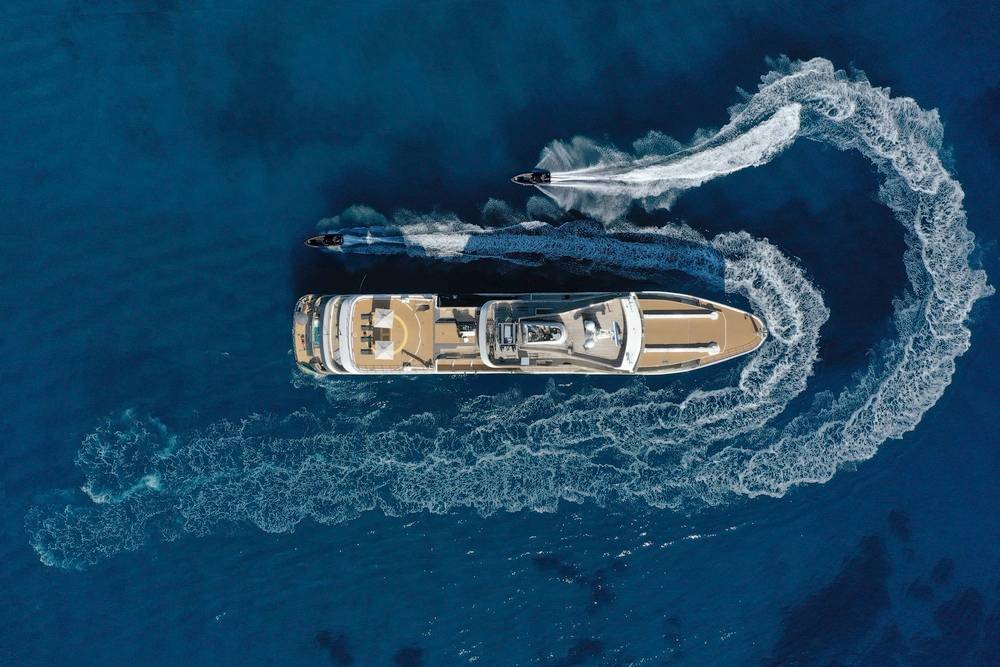
Aqua Lares

- 30Guests
- 1974Launched
- 73 mLength
All ship facts
- Crew
- 32
- Decks
- 6
- Gross tonnage
- 2407
- Speed
- 12 kts
- Width
- 14 m
- Currency on board
- USD
- Language
- en